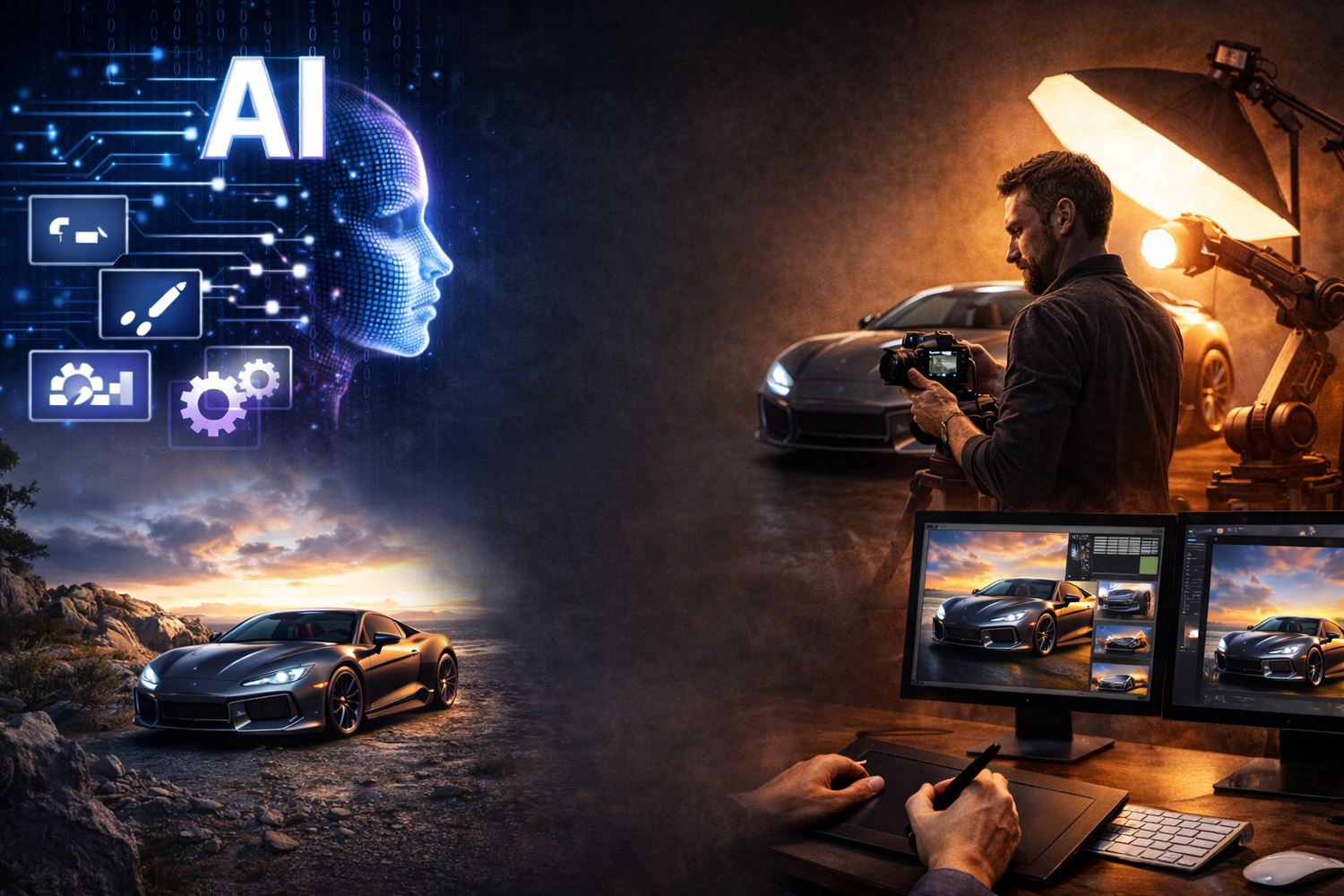
AI in Car Photography in 2026
What It’s Actually Good For — and Where It Goes Wrong
AI is everywhere in photography right now.
Sky replacements, object removal, generative fills, automated edits — all marketed as tools that promise faster workflows and “better” images. In automotive photography, AI has created a lot of noise, a lot of confusion, and a fair amount of bad imagery.
In 2026, the question isn’t whether AI exists in car photography — it’s how it’s used, where it adds value, and where it actively damages the final result.
This article breaks down AI in car photography from the perspective of a working automotive photographer: what AI is genuinely useful for, where it fails with vehicles, and why real lighting, real cars, and real decisions still matter.
Why AI Has Exploded in Automotive Photography
AI tools didn’t suddenly appear — but their accessibility did.
In the last few years:
- Editing tools became faster and cheaper
- Generative features became mainstream
- Clients started seeing AI imagery everywhere online
For car photography, this was inevitable. Cars are reflective, symmetrical, and visually striking — on paper, perfect AI subjects.
In practice, they’re one of the hardest things for AI to handle properly.
Where AI Actually Helps Car Photographers in 2026
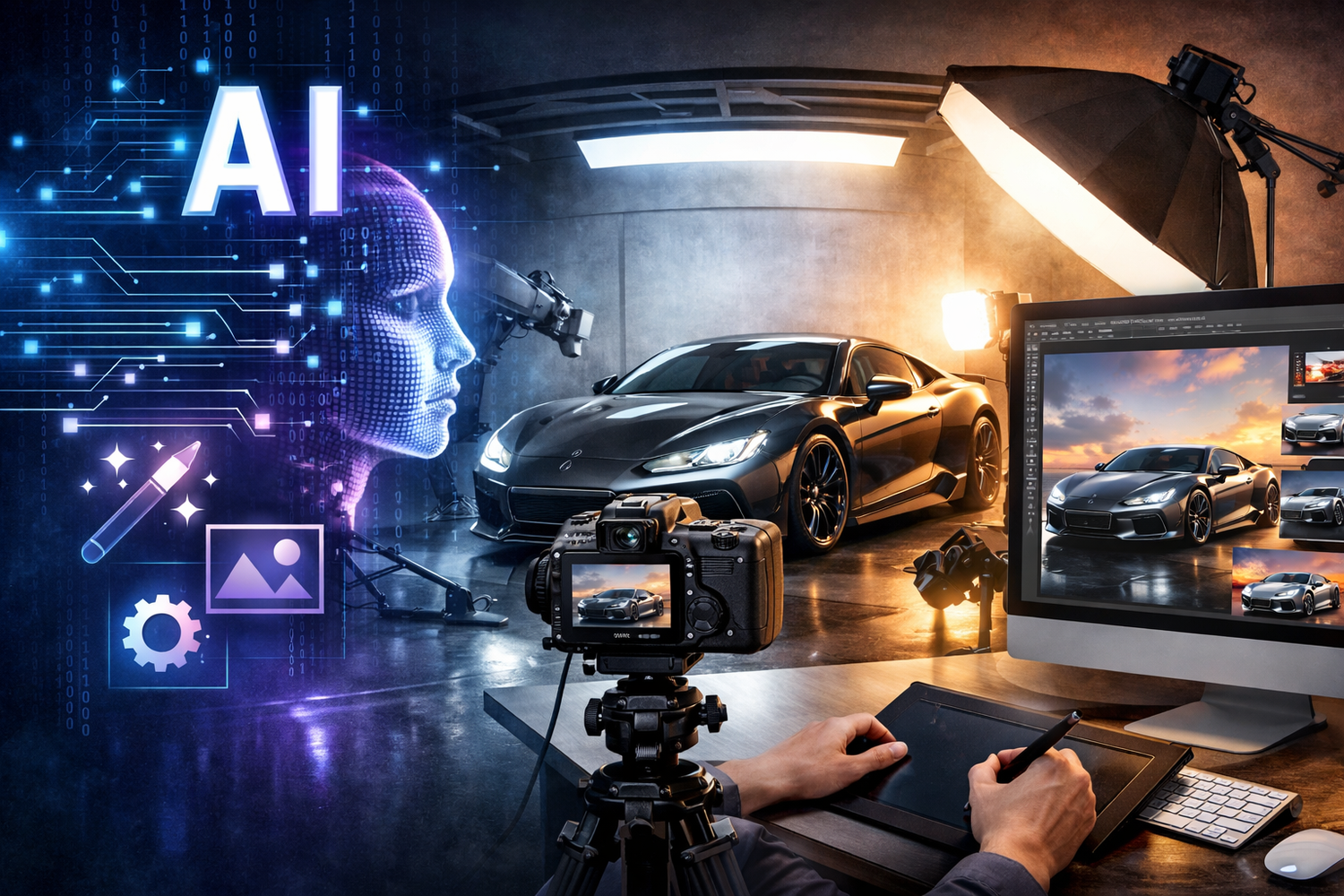
Used correctly, AI can be a powerful assistant. The key word is assistant — not replacement.
1. Image Culling and Selection
AI-based culling tools save hours by:
- Flagging technically sharp images
- Grouping similar frames
- Removing obvious rejects
This speeds up workflows without touching the creative decision-making.
2. Noise Reduction and Detail Refinement
Modern AI noise reduction can be extremely effective when used subtly, especially for:
- Night shoots
- Low-light interiors
- High ISO environments
The mistake is pushing it too far and destroying texture — something car enthusiasts spot instantly.
3. Minor Object Removal (With Restraint)
AI can help remove:
- Small distractions
- Temporary debris
- Minor imperfections not part of the vehicle
This is about refinement, not rewriting reality.
If the edit changes the character, condition, or structure of the car, it’s no longer photography — it’s illustration.
Where AI Fails Miserably With Cars
This is where most AI-generated or AI-heavy automotive images fall apart.
1. Body Lines and Panel Geometry
Cars are designed around precise lines, curves, and symmetry.
AI regularly:
- Warps panels
- Misaligns shut lines
- Softens aggressive edges
To a casual viewer, it might look fine.
To anyone who actually knows cars, it looks wrong immediately.
2. Reflections (The Big One)
Reflections define automotive photography.
AI struggles with:
- Logical reflection flow
- Consistent environments
- Accurate light sources
This is especially obvious on:
- Gloss black paint
- Glass
- Chrome and trim
Bad reflections kill realism faster than almost anything else.
3. Badges, Wheels, and Branding
AI frequently:
- Distorts logos
- Misshapes wheels
- Invents design details
For brands, dealerships, and collectors, this is unacceptable. Accuracy matters.
Why Light Still Beats Algorithms
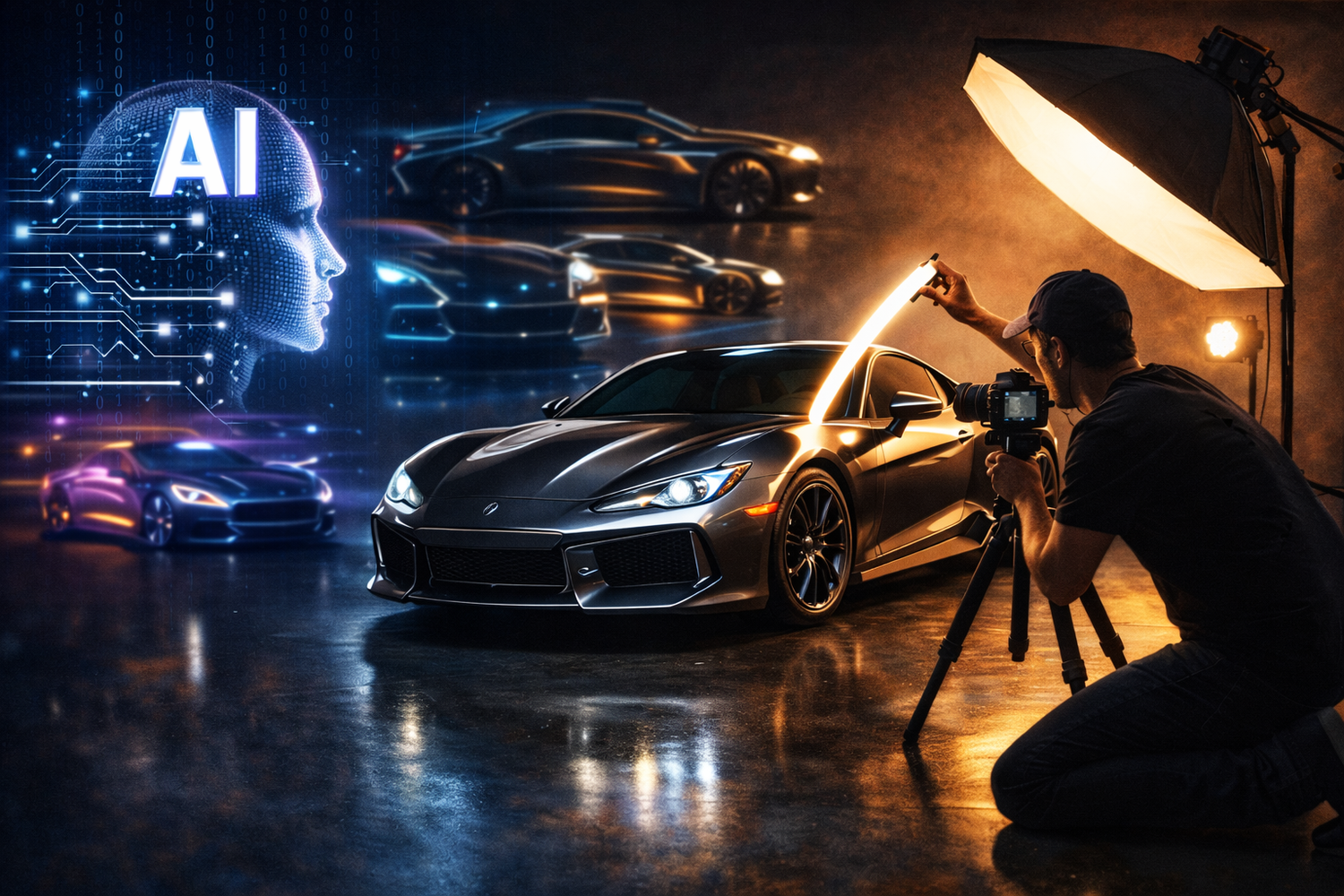
In 2026, the highest-quality car imagery still comes from real light interacting with real surfaces.
Light painting, controlled lighting, and intentional reflections:
- Preserve design intent
- Highlight form correctly
- Create depth AI struggles to fake
AI can enhance what already exists — it cannot replace the physics of light hitting a car.
That’s why professionally lit automotive photography still stands apart in feeds full of synthetic images.
How AI Is Changing Client Expectations
Clients are becoming more aware — and more cautious.
In 2026, many are asking:
- “Is this real?”
- “Does the car actually look like this?”
- “Will buyers feel misled?”
Over-processed or AI-heavy imagery may grab attention briefly, but it erodes trust long-term.
For sales, branding, and credibility, realism still wins.
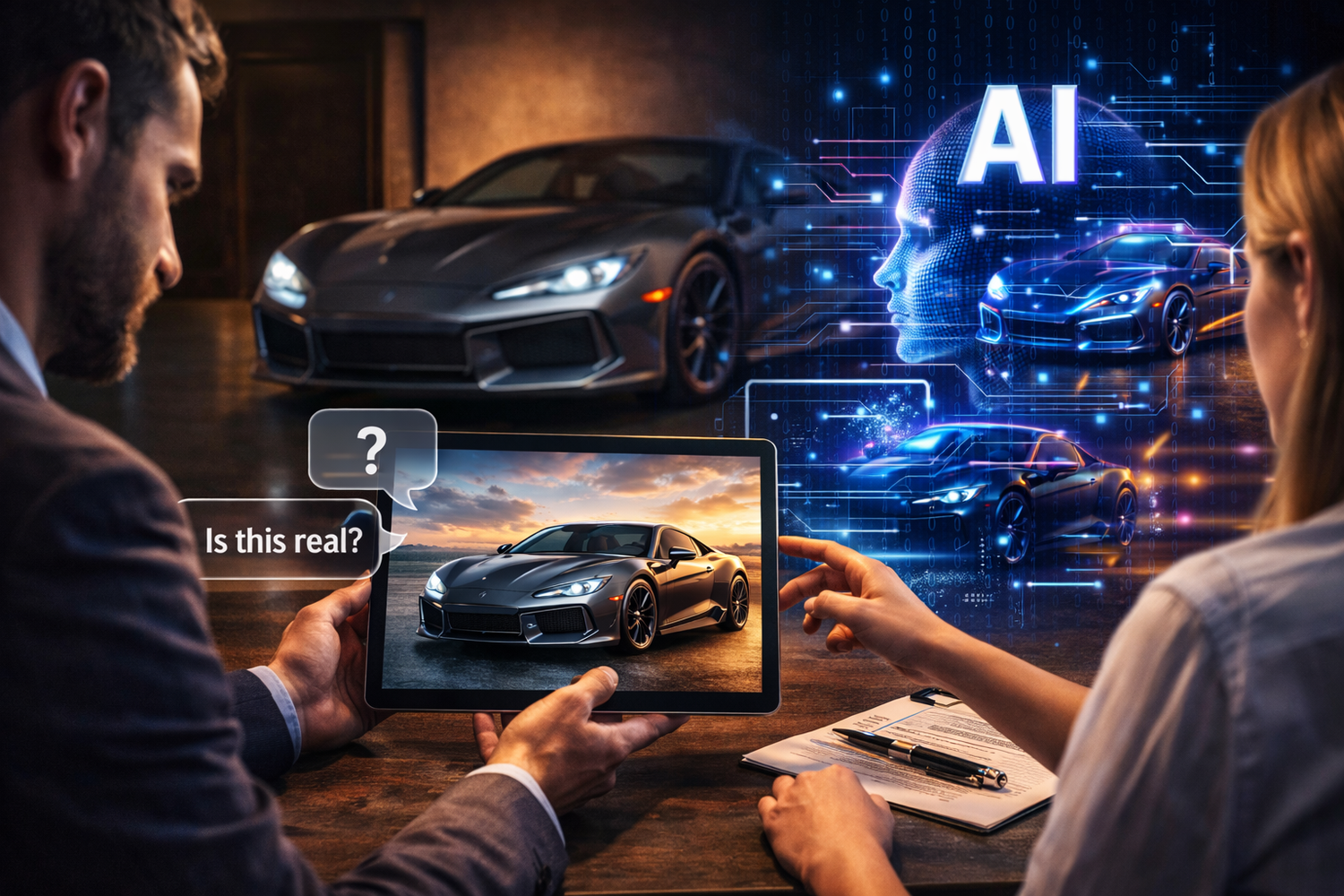
How to Spot AI-Heavy Car Photography
If you’re a client or brand, AI-heavy automotive images often show:
- Unnatural reflections
- Soft or inconsistent panel edges
- Incorrect proportions
- Strange badge or wheel details
- A “too perfect” but oddly flat look
The best car photography in 2026 doesn’t scream AI — it quietly looks right.
The Future of AI in Car Photography
AI isn’t going away — but its role is becoming clearer.
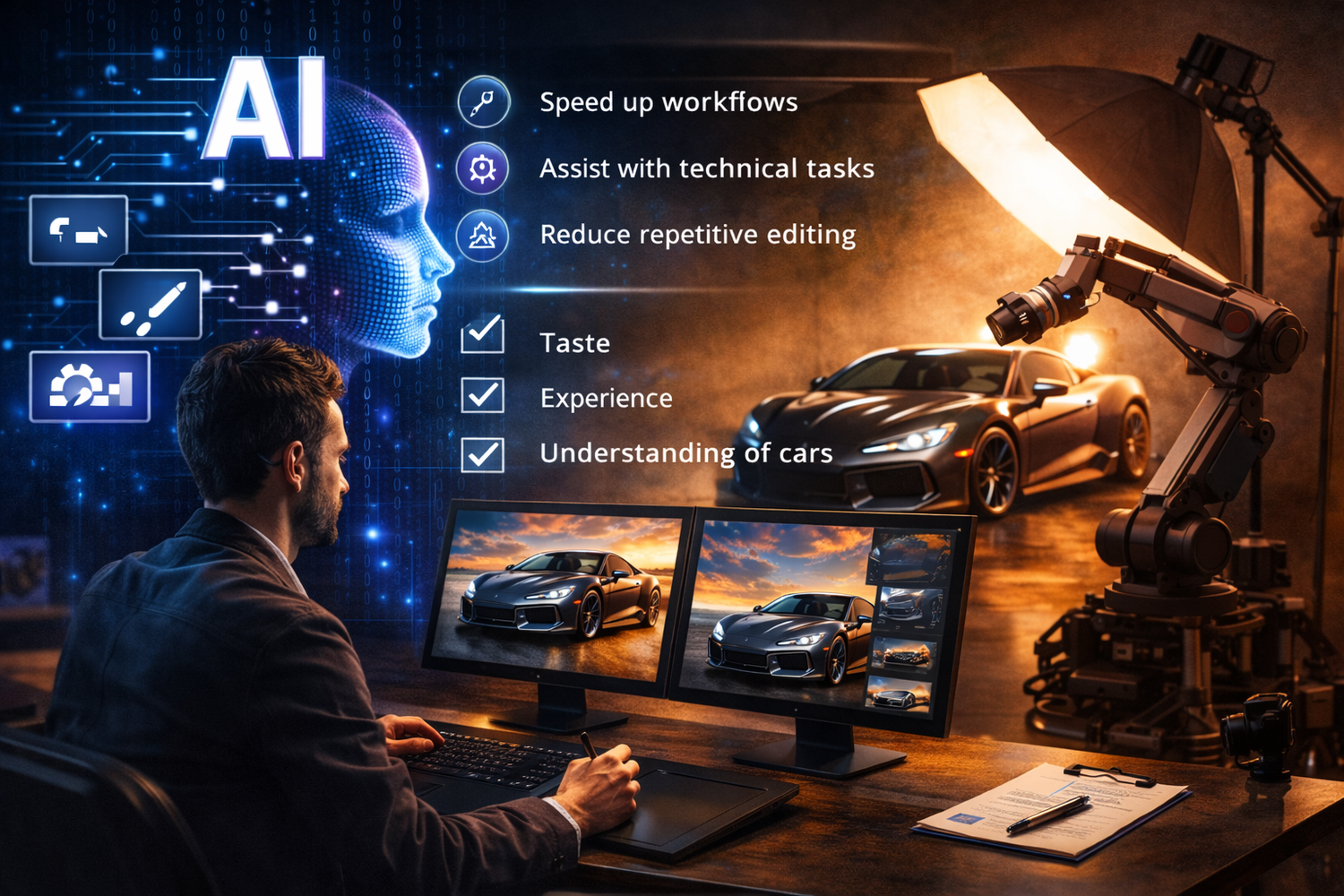
In the future, AI will:
- Speed up workflows
- Assist with technical tasks
- Reduce repetitive editing
What it won’t replace is:
- Taste
- Experience
- Understanding of cars
- The ability to shape light intentionally
Photography is still about decisions — AI just helps execute them faster.